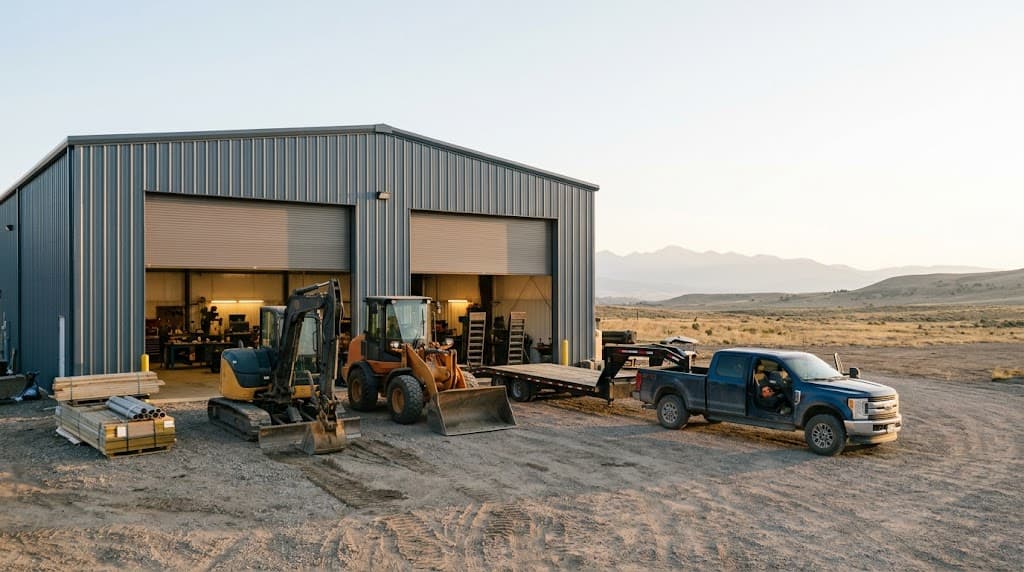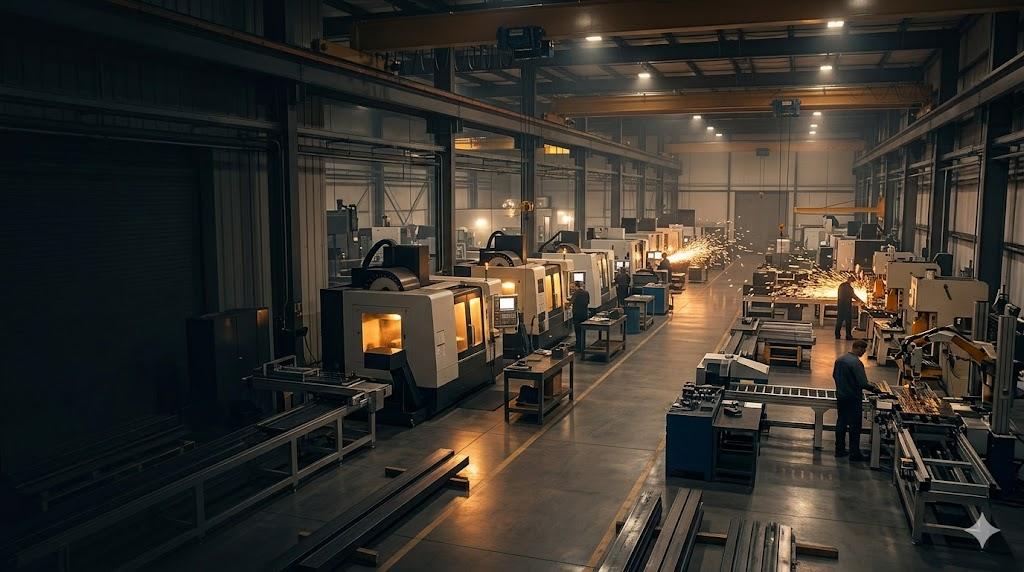
Keep the bank's money. Then fund the gap in pieces, each one matched to what it pays for. Equipment goes on equipment financing, secured by the machine. Unpaid invoices go on receivables financing. Payroll, materials, and the ramp go on a working-capital layer sized to your deposits. Those pieces come from lenders who each do one thing, and they fund in days, not the bank's 60 to 90.
Before you add anything, read the bank's commitment letter for two lines: what the bank is taking as collateral, and what it says about borrowing from anyone else. Those two lines decide which pieces fit.
Here is the example this page uses. A manufacturer doing $6M a year needs $2M to add a production line. The bank approves $1.2M. The other $800K is the gap. This page is written for gaps of $250K and up.
How Come the Bank Came In Low?
It is rarely about you. A bank sizes a loan three ways, and the smallest answer wins.
Collateral. The bank lends against what it can appraise and sell. Install, freight, software, and working capital have no resale value, so they get cut.
Coverage. The bank wants your cash flow to cover the new payment with room to spare. That ratio is called DSCR, and this post explains how lenders figure it.
Policy. Every bank has a ceiling for a company your size in your industry. You can be a good borrower and still hit it.
None of those mean the project is too big. They mean one lender won't carry all of it.
Read These Two Lines Before You Add a Lender
What the bank is taking as collateral. Many bank loans come with a lien on all business assets. You will see it called a blanket lien or a UCC filing. It means the bank is first in line on everything, including equipment you haven't bought yet and invoices you haven't sent yet.
What it says about other debt. Some commitment letters require the bank's written consent before you borrow anywhere else. Borrowing without it can put the bank loan in default.
Neither one stops you. They tell you what to ask for. If you want equipment or receivables financed by someone else, ask the bank to carve those assets out, or to step behind the second lender on them. That is called subordination. Some banks agree and some don't. Ask before you sign the bank's loan. It is much easier to get then than after.
Match Each Piece of the Gap to the Right Tool
| What the gap pays for | The tool | What sizes it | How fast |
|---|---|---|---|
| Machinery, vehicles, a production line | Equipment financing | The equipment's cost, about 10% down, secured by that equipment | Days |
| Cash stuck in unpaid invoices | Receivables financing | The invoices you have outstanding | 24 to 48 hours |
| Payroll, materials, install, the ramp | Working capital | Roughly 10% to 15% of annual revenue, read from four months of deposits | 1 to 3 days |
| A larger fixed need with a set payoff | Term loan | Revenue and time in business | 2 to 7 days |
Buying $1M or more of equipment as a $10M+ company? The whole project can be financed at 100%, install and software included. The capex financing page covers how.
Back to the manufacturer. The $800K gap was $500K of machinery and $300K of install and ramp-up cash. The machinery moves to equipment financing, secured only by the new line. The $300K goes on working capital, which fits inside the range a $6M company supports. The bank's $1.2M stays where it is, at the bank's terms. One application covers the two new pieces. These figures are an illustration.
Here is the same idea at a larger size: a Denver contractor moving into commercial work, a $2.5M structure in three layers, funded in 24 days. Real estate, equipment, and a $300K working-capital layer, each from a lender that does that one thing. The mechanics are the same whether a bank holds one of the layers or not. This is capital stacking, and it is how most projects above $1M get funded.
Denver residential contractor moving into commercial work
Owner-occupied commercial real estate + equipment financing + working capital
$2.5M
Three layers, one application, funded in 24 days · $300K working-capital layer for bonding capacity, mobilization, and payroll · shop, yard, and equipment in place
See the full case →One application covers the layers the bank didn't.
Start Your Funding Request →Here's What Most People Get Wrong
They treat a partial approval as a no. Then they do one of two things: walk away from the bank's money, or cut the project down to fit the bank's number.
The bank's piece is usually the least expensive money in the whole structure. Keep it. And cutting the project often costs more than the gap would have. The line that was supposed to run three shifts runs one, and the contract that justified it goes to someone else.
There is one case where you should not fill the gap. If the bank cut the number because your cash flow doesn't cover the payment, more debt on top makes that worse, not better. Then the right move is to phase the project, and we will tell you that.
What to Have Ready
- The bank's commitment letter or term sheet
- Four months of business bank statements
- A list of what the $2M buys, with vendor quotes for the equipment
- Your receivables aging report, if invoices are part of the picture
Frequently Asked Questions
What do I do if the bank approved less than I asked for?
Keep the bank's approval and fund the rest separately. Split the gap by what it pays for, then put each piece on the tool built for it: equipment financing, receivables financing, or working capital.
Can I use a second lender alongside my bank loan?
Usually, yes. Check the bank's commitment letter first. If the bank has a lien on all business assets or requires consent for other borrowing, get that consent or a carve-out in writing before the second lender funds.
Will a second loan put my bank loan in default?
It can, if your bank loan requires consent for additional debt and you don't get it. Read that section before you sign anything else, and ask the bank in writing.
How fast can the gap be funded?
Working capital funds in 1 to 3 days on a prepared file. Receivables financing funds in 24 to 48 hours. Equipment financing funds in days. All of it can be in place before the bank's own loan funds.
Should I turn down the bank and finance the whole thing somewhere else?
Rarely. The bank's money is usually the least expensive layer. The exception is timing: if the bank needs 60 to 90 days and the purchase can't wait, fund now and refinance into longer-term money later.
What is a subordination agreement?
It is a short document where one lender agrees to stand behind another on a specific asset. For example, the bank keeps its lien on everything else but lets the equipment lender be first on the new machine.
Bobby's Take
I've spent 20+ years in banking and finance. When a bank comes back at 60% of what you asked for, the banker is not telling you the project is a bad idea. He is telling you where his credit policy stops. That is useful to know. It tells you exactly how much of this the bank will carry, and what is left for lenders who look at equipment, invoices, and deposits instead of a policy manual.
Bring me the commitment letter. It's the first thing I read.
Fund the Part the Bank Left Out
One application covers the layers the bank didn't. Soft-pull only. No obligation.